
You are using an out of date browser. It may not display this or other websites correctly.
You should upgrade or use an alternative browser.
You should upgrade or use an alternative browser.
Sarracenia manual pollination/Sarracenia crosses
- Thread starter WillyCKH
- Start date


Has anyone else noticed non naturally created hybrid Sarracenia not catching near the amount or filling up as fast of wasps and fly’s?
My flava’s, oreo’s, alata’s, minor and luco’s are all somewhat an original wild variety, once they open a pitcher it’s full to the brim of bugs within 2 days.
I have had manny hybrids some real nice looking ones like the stunning Sarracenia ‘Copper vase’ which didn’t catch at all. If you did see a single bug in there is was a moth just finding a place to hide.

Most the interest for me is the fascinating way they evolved to live places other plants couldn’t by eating bugs. I ended up giving a lot of my hybrids away even though they looked stunning I was disappointed in the lacklustre murderous capabilities.
My flava’s, oreo’s, alata’s, minor and luco’s are all somewhat an original wild variety, once they open a pitcher it’s full to the brim of bugs within 2 days.
I have had manny hybrids some real nice looking ones like the stunning Sarracenia ‘Copper vase’ which didn’t catch at all. If you did see a single bug in there is was a moth just finding a place to hide.
Most the interest for me is the fascinating way they evolved to live places other plants couldn’t by eating bugs. I ended up giving a lot of my hybrids away even though they looked stunning I was disappointed in the lacklustre murderous capabilities.
An example.
Sarracenia purpurea catches some flying bugs but most of its nutrition comes from its mutually beneficial relationship with bacteria and in most of its range a type of mosquito larvae breaking down algae, dead bugs and other detritus.
Sarracenia flava secrets poisonous nectar to get flying bugs woozy so they fall into the trap with a much higher percentage of bugs trapped by Sarracenia flava than Sarracenia purpurea. In fact a side by side comparison of visitations the flava would have manny more visitors and much less escape.
Take a hybrid between Sarracenia purpurea and Sarracenia flava and compared that plants catch rate to a natural flava it will have much less captures and less interactions with decomposer insects than natural purpurea. The result is effectively diluting each parent plants evolved strategy for trapping nutrients, the flava of less bugs and the purpurea of the nutrients derived from mosquito and bacterial action.

Sarracenia alata doing what it does best.

Sarracenia purpurea catches some flying bugs but most of its nutrition comes from its mutually beneficial relationship with bacteria and in most of its range a type of mosquito larvae breaking down algae, dead bugs and other detritus.
Sarracenia flava secrets poisonous nectar to get flying bugs woozy so they fall into the trap with a much higher percentage of bugs trapped by Sarracenia flava than Sarracenia purpurea. In fact a side by side comparison of visitations the flava would have manny more visitors and much less escape.
Take a hybrid between Sarracenia purpurea and Sarracenia flava and compared that plants catch rate to a natural flava it will have much less captures and less interactions with decomposer insects than natural purpurea. The result is effectively diluting each parent plants evolved strategy for trapping nutrients, the flava of less bugs and the purpurea of the nutrients derived from mosquito and bacterial action.
Sarracenia alata doing what it does best.

My S. flava's and a N. x Miranda caught lots of wasps.
Sarracenia flava var. rubricorpora developed by nature, full to the brim of flys and moths with maggots spilling out of holes lower down the tube.
Ever seen a hybrid eat like that?

Ever seen a hybrid eat like that?

Raymond
Carnivorous Plant Addict
All my purps are filled with flies, except for the recent pitchers, after about 1month open then the flies flock to it and fill it up within a few days. The main staple bug diet in my yard is only flying insect and I have not gotten any observable mosquitoes larvae.

Sib
Carnivorous Plant Addict
All my purps are filled with flies, except for the recent pitchers, after about 1month open then the flies flock to it and fill it up within a few days. The main staple bug diet in my yard is only flying insect and I have not gotten any observable mosquitoes larvae.
funny, my purps rarely catch flies... and they don't have mosqueto larve either... some ants... some small unidetified bugs, not big eaters here
Now anything flava... beasts... even the seedlings, i've been feeding them because flies will stuff themselves in the pitcher mouth, blocking anything else from getting in but not being down far enough to be digested
Raymond
Carnivorous Plant Addict

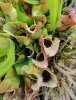
My flavas used to buzz with the wasps inside.
You need some bugs in there Raymond to break those flys down!
Sarracenia purpurea, Wyeomyia smithii, known as the pitcher plant mosquito and the micro ecosystem that is home to some and provides nutrients to the plant that might not be much of a carnivore.

 oleaeuropea.wordpress.com
Sarracenia purpurea, Wyeomyia smithii, known as the pitcher plant mosquito and the micro ecosystem that is home to some and provides nutrients to the plant that might not be much of a carnivore.
The Fascinating Microcosm of the Pitcher Plant.
Who doesn’t love carnivorous plants? Even people who don’t really care about plants find carnivorous ones at least a little interesting. I think it’s because they violate our expe…
oleaeuropea.wordpress.com


Pings.pinguicula
Seedling
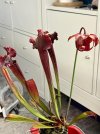
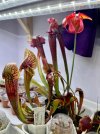
This sarracenia I had, was my fav and best looking one. So when she flowered, of course I wanted to try my hand at pollinating.
When a pod was developing, I was so excited! I didn’t know how long or big it it should take, but I waited.
But then aphids decimated all of my sarracenia; I tried smooshing them, drowning them (submerging the whole plant in water for 24hr), nothing. I gave up, including on that developing pod, I let it just dry up on my bathroom counter.
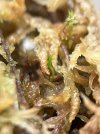
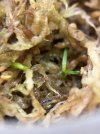
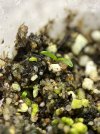
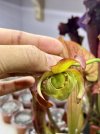
I decided to try and open the pod anyways, see if anything developed, and there was quite a bit of seeds despite how small it was! It never really grew bigger than the attached pic, just eventually turned brown. I’d say there was roughly 100 seeds give or take.
Anyways, I cold strat them back in aug and all that jazz.
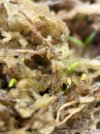
Look!! They’re growing!!!
And (no pictured), but I did managed to save my what I though bone-dry way gone mother sarr!
Attachments
It sounds dumb, but when my milkweeds get covered with aphids, I use an artist's paintbrush to wipe them off. It takes a bit of work but it's effective.
Those are annoying as hell on milkweed....they literally cover the stem and under leaves when you let it out of control...I tend to use the garden hose with some pressure to get rid of them but always fear of destroying any monarch eggs that could be somewhere around the leaves...the good old glove and finger squish is a less delicate way of doing it ...but that brush tip is surely neat heheIt sounds dumb, but when my milkweeds get covered with aphids, I use an artist's paintbrush to wipe them off. It takes a bit of work but it's effective.